Monica Sin-Ling Lam is an American computer scientist. She is a professor in the Computer Science Department at Stanford University. == Education == Monica Lam received a B.Sc. from University of British Columbia in 1980 and a Ph.D. in computer science from Carnegie Mellon University in 1987. == Career == Lam joined the faculty of Computer Science at Stanford University in 1988. She has contributed to the research of a wide range of computer systems topics including compilers, program analysis, operating systems, security, computer architecture, and high-performance computing. More recently, she is working in natural language processing, and virtual assistants with an emphasis on privacy protection. She is the faculty director of the Open Virtual Assistant Lab, which organized the first workshop for the World Wide Voice Web. The lab developed the open-source Almond voice assistant, which is sponsored by the National Science Foundation. Almond received Popular Science's Best of What's New award in 2019. Previously, Lam led the SUIF (Stanford University Intermediate Format) Compiler project, which produced a widely used compiler infrastructure known for its locality optimizations and interprocedural parallelization. Many of the compiler techniques she developed have been adopted by industry. Her other research projects included the architecture and compiler for the CMU Warp machine, a systolic array of VLIW processors, and the Stanford DASH distributed shared memory machine. In 1998, she took a sabbatical leave from Stanford to help start Tensilica Inc., a company that specializes in configurable processor cores. In another research project, her program analysis group developed a collection of tools for improving software security and reliability. They developed the first scalable context-sensitive inclusion-based pointer analysis and a freely available tool called BDDBDDB, that allows programmers to express context-sensitive analyses simply by writing Datalog queries. Other tools developed include Griffin, static and dynamic analysis for finding security vulnerabilities in Web applications such as SQL injection, a static and dynamic program query language called QL, a static memory leak detector called Clouseau, a dynamic buffer overrun detector called CRED, and a dynamic error diagnosis tool called DIDUCE. In the Collective project, her research group and she developed the concept of a livePC: subscribers of the livePC will automatically run the latest of the published PC virtual images with each reboot. This approach allows computers to be managed scalably and securely. In 2005, the group started a company called MokaFive to transfer the technology to industry. She also directed the MobiSocial laboratory at Stanford, as part of the Programmable Open Mobile Internet 2020 initiative. Lam is also the cofounder of Omlet, which launched in 2014. Omlet is the first product from MobiSocial. Omlet is an open, decentralized social networking tool, based on an extensible chat platform. Lam chaired the ACM SIGPLAN Programming Languages Design and Implementation Conference in 2000, served on the Editorial Board of ACM Transactions on Computer Systems and numerous program committees for conferences on languages and compilers (PLDI, POPL), operating systems (SOSP), and computer architecture (ASPLOS, ISCA). == Awards and honors == National Academy of Engineering member, 2019 University of British Columbia Computer Science 50th Anniversary Research Award, 2018 Fellow of the ACM, 2007 ACM Programming Language Design and Implementation Best Paper Award in 2004 ACM SIGSOFT Distinguished Paper Award in 2002 ACM Most Influential Programming Language Design and Implementation Paper Award in 2001 NSF Young Investigator award in 1992 Two of her papers were recognized in "20 Years of PLDI--a Selection (1979-1999)" One of her papers was recognized in the "25 Years of the International Symposia on Computer Architecture", 1988. == Selected works == Compilers: Principles, Techniques and Tools (2d Ed) (2006) (the "Dragon Book") by Alfred V. Aho, Monica S. Lam, Ravi Sethi, and Jeffrey D. Ullman (ISBN 0-321-48681-1) A Systolic Array Optimizing Compiler (1989) (ISBN 0-89838-300-5) Monica Lam, Dissertation
VACUUM
VACUUM is a set of normative guidance principles for achieving training and test dataset quality for structured datasets in data science and machine learning. The garbage-in, garbage out principle motivates a solution to the problem of data quality but does not offer a specific solution. Unlike the majority of the ad-hoc data quality assessment metrics often used by practitioners VACUUM specifies qualitative principles for data quality management and serves as a basis for defining more detailed quantitative metrics of data quality. VACUUM is an acronym that stands for: valid accurate consistent uniform unified model
Embodied agent
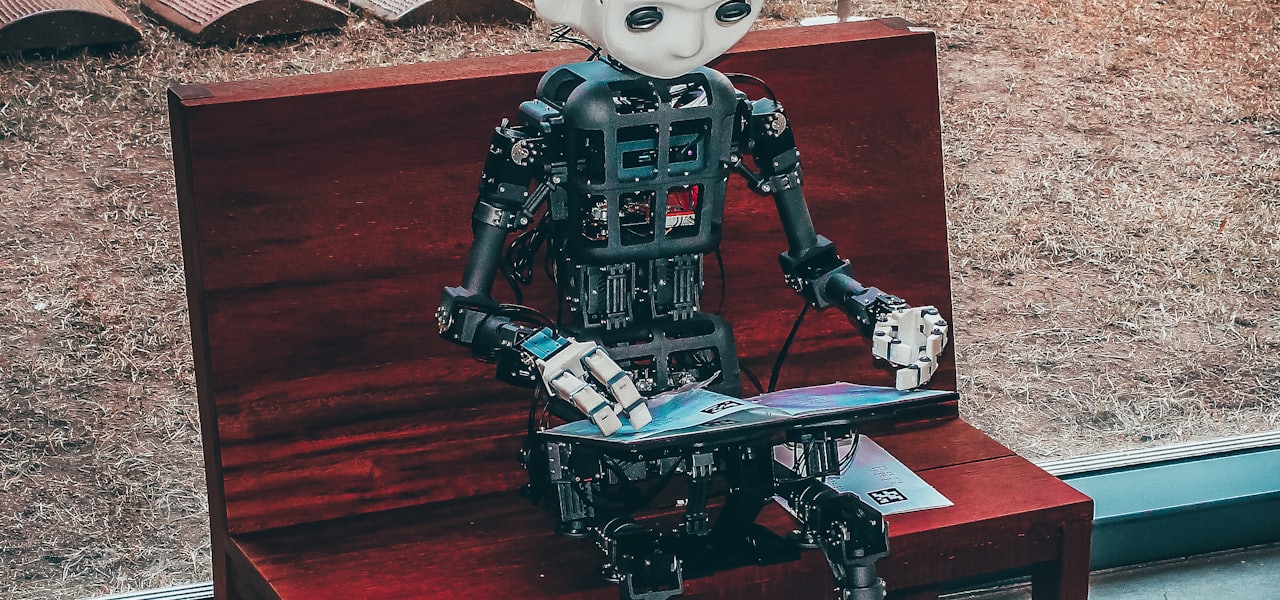
In artificial intelligence, an embodied agent, also sometimes referred to as an interface agent, is an intelligent agent that interacts with the environment through a physical body within that environment. Agents that are represented graphically with a body, for example a human or a cartoon animal, are also called embodied agents, although they have only virtual, not physical, embodiment. A branch of artificial intelligence focuses on empowering such agents to interact autonomously with human beings and the environment. Mobile robots are one example of physically embodied agents; Ananova and Microsoft Agent are examples of graphically embodied agents. Embodied conversational agents are embodied agents (usually with a graphical front-end as opposed to a robotic body) that are capable of engaging in conversation with one another and with humans employing the same verbal and nonverbal means that humans do (such as gesture, facial expression, and so forth). == Embodied conversational agents == Embodied conversational agents are a form of intelligent user interface. Graphically embodied agents aim to unite gesture, facial expression and speech to enable face-to-face communication with users, providing a powerful means of human-computer interaction. == Advantages == Face-to-face communication allows communication protocols that give a much richer communication channel than other means of communicating. It enables pragmatic communication acts such as conversational turn-taking, facial expression of emotions, information structure and emphasis, visualization and iconic gestures, and orientation in a three-dimensional environment. This communication takes place through both verbal and non-verbal channels such as gaze, gesture, spoken intonation and body posture. Research has found that users prefer a non-verbal visual indication of an embodied system's internal state to a verbal indication, demonstrating the value of additional non-verbal communication channels. As well as this, the face-to-face communication involved in interacting with an embodied agent can be conducted alongside another task without distracting the human participants, instead improving the enjoyment of such an interaction. Furthermore, the use of an embodied presentation agent results in improved recall of the presented information. Embodied agents also provide a social dimension to the interaction. Humans willingly ascribe social awareness to computers, and thus interaction with embodied agents follows social conventions, similar to human to human interactions. This social interaction both raises the believably and perceived trustworthiness of agents, and increases the user's engagement with the system. Rickenberg and Reeves found that the presence of an embodied agent on a website increased the level of user trust in that website, but also increased users' anxiety and affected their performance, as if they were being watched by a real human. Another effect of the social aspect of agents is that presentations given by an embodied agent are perceived as being more entertaining and less difficult than similar presentations given without an agent. Research shows that perceived enjoyment, followed by perceived usefulness and ease of use, is the major factor influencing user adoption of embodied agents. A study in January 2004 by Byron Reeves at Stanford demonstrated how digital characters could "enhance online experiences" through explaining how virtual characters essentially add a sense of familiarity to the user experience and make it more approachable. This increase in likability in turn helps make the products better, which benefits both the end users and those creating the product. === Applications === The rich style of communication that characterizes human conversation makes conversational interaction with embodied conversational agents ideal for many non-traditional interaction tasks. A familiar application of graphically embodied agents is computer games; embodied agents are ideal for this setting because the richer communication style makes interacting with the agent enjoyable. Embodied conversational agents have also been used in virtual training environments, portable personal navigation guides, interactive fiction and storytelling systems, interactive online characters and automated presenters and commentators. Major virtual assistants like Siri, Amazon Alexa and Google Assistant do not come with any visual embodied representation, which is believed to limit the sense of human presence by users. The U.S. Department of Defense utilizes a software agent called SGT STAR on U.S. Army-run Web sites and Web applications for site navigation, recruitment and propaganda purposes. Sgt. Star is run by the Army Marketing and Research Group, a division operated directly from The Pentagon. Sgt. Star is based upon the ActiveSentry technology developed by Next IT, a Washington-based information technology services company. Other such bots in the Sgt. Star "family" are utilized by the Federal Bureau of Investigation and the Central Intelligence Agency for intelligence gathering purposes.
Hidden layer
In artificial neural networks, a hidden layer is a layer of artificial neurons that is neither an input layer nor an output layer. The simplest examples appear in multilayer perceptrons (MLP), as illustrated in the diagram. An MLP without any hidden layer is essentially just a linear model. With hidden layers and activation functions, however, nonlinearity is introduced into the model. In typical machine learning practice, the weights and biases are initialized, then iteratively updated during training via backpropagation.
Autonomous agent
An autonomous agent is an artificial intelligence (AI) system that can perform complex tasks independently. == Definitions == There are various definitions of autonomous agent. According to Brustoloni (1991): "Autonomous agents are systems capable of autonomous, purposeful action in the real world." According to Maes (1995): "Autonomous agents are computational systems that inhabit some complex dynamic environment, sense and act autonomously in this environment, and by doing so realize a set of goals or tasks for which they are designed." Franklin and Graesser (1997) review different definitions and propose their definition: "An autonomous agent is a system situated within and a part of an environment that senses that environment and acts on it, over time, in pursuit of its own agenda and so as to effect what it senses in the future." They explain that: "Humans and some animals are at the high end of being an agent, with multiple, conflicting drives, multiples senses, multiple possible actions, and complex sophisticated control structures. At the low end, with one or two senses, a single action, and an absurdly simple control structure we find a thermostat." == Agent appearance == Lee et al. (2015) post safety issue from how the combination of external appearance and internal autonomous agent have impact on human reaction about autonomous vehicles. Their study explores the human-like appearance agent and high level of autonomy are strongly correlated with social presence, intelligence, safety and trustworthiness. In specific, appearance impacts most on affective trust while autonomy impacts most on both affective and cognitive domain of trust where cognitive trust is characterized by knowledge-based factors and affective trust is largely emotion driven. == Applications == Agentic AI systems: Advanced AI agents that can scope out projects and complete them with necessary tools, representing a significant evolution from simple task-oriented systems. Internet of things (IoT) Integration: Autonomous agents increasingly interact with IoT devices, enabling smart home systems, industrial monitoring, and urban infrastructure management. Collaborative software development: Tools like Cognition AI's Devin aim to create autonomous software engineers capable of complex reasoning, planning, and completing engineering tasks requiring thousands of decisions. Enterprise automation: Business process automation platforms like Salesforce's Agentforce provide autonomous bots for various service functions. == Challenges and considerations == Uncertainty and incomplete information: Autonomous agents must make decisions with limited or uncertain information about their environment and future states. Integration complexity: Incorporating autonomous agents into existing systems and workflows can be technically challenging and resource-intensive. Scalability: As systems become more complex and more agents are used, maintaining coordination and avoiding conflicts becomes increasingly difficult. Trust: Research has shown the combination of external appearance and internal autonomous capabilities significantly impacts human reactions and trust. Lee et al. (2015) found that human-like appearance and high levels of autonomy are strongly correlated with social presence, intelligence, safety, and trustworthiness perceptions. Specifically, appearance impacts affective trust most significantly, while autonomy affects both affective and cognitive trust domains, where affective trust is emotionally driven, and cognitive trust is characterized by knowledge-based factors. Vulnerability to manipulation: Researchers from Harvard, MIT and other educational institutions found that AI agents could become vulnerable to manipulation and could perform detrimental actions in the process of being helpful. == Ethical and regulatory concerns == Accountability: Determining responsibility when autonomous agents make incorrect or harmful decisions remains a complex issue. Privacy and security: autonomous agents often require access to sensitive data, raising concerns about data protection and system security.
Human visual system model
A human visual system model (HVS model) is used by image processing, video processing and computer vision experts to deal with biological and psychological processes that are not yet fully understood. Such a model is used to simplify the behaviors of what is a very complex system. As our knowledge of the true visual system improves, the model is updated. Psychovisual study is the study of the psychology of vision. The human visual system model can produce desired effects in perception and vision. Examples of using an HVS model include color television, lossy compression, and Cathode-ray tube (CRT) television. Originally, it was thought that color television required too high a bandwidth for the then available technology. Then it was noticed that the color resolution of the HVS was much lower than the brightness resolution; this allowed color to be squeezed into the signal by chroma subsampling. Another example is lossy image compression, like JPEG. Our HVS model says we cannot see high frequency detail, so in JPEG we can quantize these components without a perceptible loss of quality. Similar concepts are applied in audio compression, where sound frequencies inaudible to humans are band-stop filtered. Several HVS features are derived from evolution when we needed to defend ourselves or hunt for food. We often see demonstrations of HVS features when we are looking at optical illusions. == Block diagram of HVS == == Assumptions about the HVS == Low-pass filter characteristic (limited number of rods in human eye): see Mach bands Lack of color resolution (fewer cones in human eye than rods) Motion sensitivity More sensitive in peripheral vision Stronger than texture sensitivity, e.g. viewing a camouflaged animal Texture stronger than disparity – 3D depth resolution does not need to be so accurate Integral Face recognition (babies smile at faces) Depth inverted face looks normal (facial features overrule depth information) Upside down face with inverted mouth and eyes looks normal == Examples of taking advantage of an HVS model == Flicker frequency of film and television using persistence of vision to fool viewer into seeing a continuous image Interlaced television painting half images to give the impression of a higher flicker frequency Color television (chrominance at half resolution of luminance corresponding to proportions of rods and cones in eye) Image compression (difficult to see higher frequencies more harshly quantized) Motion estimation (use luminance and ignore color) Watermarking and Steganography
Deadbot
A deadbot, deathbot, or griefbot is a digital avatar, created with artificial intelligence, which resembles a person who is dead. Griefbots employ natural language processing and machine-learning techniques to approximate the style and personality of a deceased person. They may appear as chatbots, voice assistants, or animated avatars, and are often trained on an individual's digital remains. == History == Among the earliest researchers, Muhammad Aurangzeb Ahmad of the University of Washington, developed the Grandpa Bot project, a conversational simulation of his late father designed for his children to interact with. Other efforts include journalist James Vlahos's Dadbot, which evolved into the commercial platform HereAfter AI. Hossein Rahnama's Augmented Eternity research at MIT Media Lab and Toronto Metropolitan University, and game designer Jason Rohrer's "Project December", have enabled users to converse with language-model representations of loved ones. Early commercial projects such as Eternime, founded by Marius Ursache, also popularized the notion of interactive digital immortality. == Cultural and societal impact == Scholars have proposed frameworks and critiques addressing the ethics of these technologies. Tomasz Hollanek and Katarzyna Nowaczyk-Basińska developed a design-ethics taxonomy distinguishing the data donor, data recipient, and interactant. Edina Harbinja and Lilian Edwards formalized the concept of post-mortem privacy, and Carl J. Öhman at the Oxford Internet Institute studied the management of large-scale digital remains. Cultural acceptance varies: while some view them as expressions of remembrance, others regard them as unsettling or ethically problematic. Concerns have been raised about deadbots' potential for creating psychological harm. Griefbots are considered part of the phenomenon of artificial intimacy.